
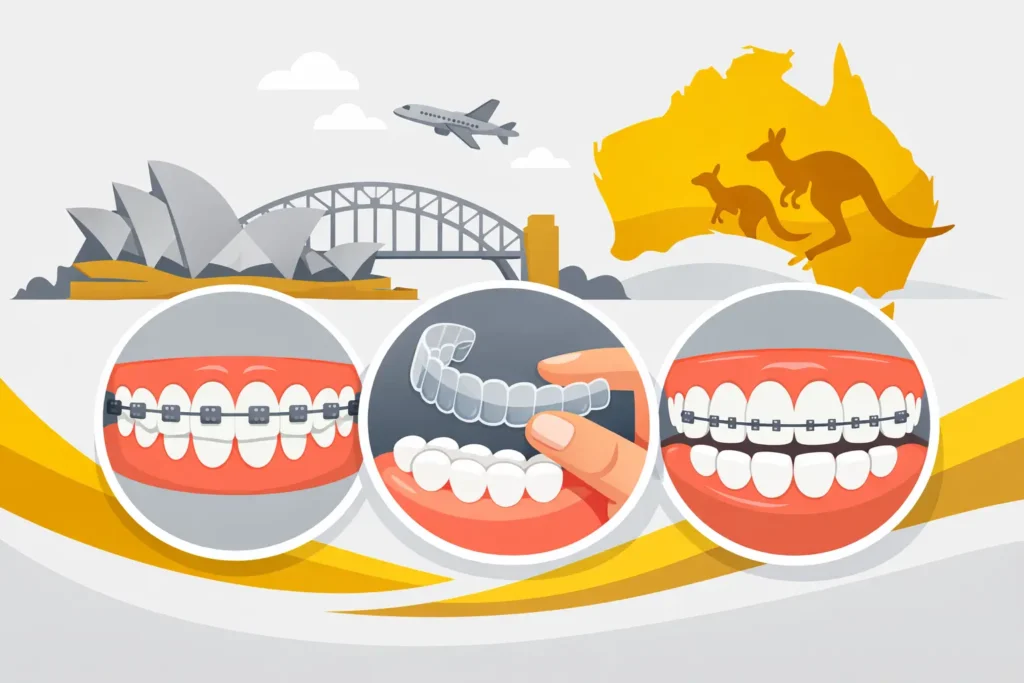
A crooked front tooth might bother you every time you smile in a photo. A crowded bite might be harder to clean properly. For many adults, researching teeth straightening options Australia offers starts with looks, but the real decision usually comes down to a mix of confidence, cost, convenience and oral health.
The good news is there is no single “best” treatment for everyone. The right option depends on how complex your case is, how visible you want treatment to be, how disciplined you are with wear time, and what your budget looks like. If you are comparing treatment in Australia, it helps to understand what each option can realistically do before you book a consult.
Teeth straightening options in Australia
Most Australians choosing orthodontic treatment will end up comparing clear aligners, traditional metal braces, ceramic braces and lingual braces. In some cases, your dentist or orthodontist may also suggest a combined approach, especially if crowding, bite issues or tooth movement are more involved.
Clear aligners are often the first thing adults look at because they are discreet and removable. Braces, on the other hand, remain the benchmark for more complex tooth movement. That does not make braces automatically better, but it does mean they are often more suitable when precise control is needed.
Clear aligners
Clear aligners use a series of custom-made transparent trays to move teeth gradually. You wear them for most of the day, take them out for meals and brushing, and switch to the next set according to your treatment plan.
For busy professionals and adults who want a low-profile option, aligners are appealing. They are easier to clean around than fixed braces, and there are no brackets or wires rubbing on the inside of your mouth. Many people also like the flexibility of being able to remove them for important events.
That flexibility is also the catch. Aligners only work if you wear them as instructed, often 20 to 22 hours a day. If they spend too much time in the case instead of in your mouth, treatment can slow down or results may suffer. They are often a strong fit for mild to moderate crowding, spacing and some bite concerns, but not every case is suitable.
In Australia, aligner costs vary widely depending on complexity, provider type and whether treatment is supervised by a dentist, orthodontist or remote platform. Simple cases may be cheaper, while comprehensive in-chair treatment can cost much more.
Metal braces
Metal braces are the most familiar orthodontic option and still one of the most effective. Brackets are bonded to the teeth and connected with wires, allowing steady and highly controlled movement over time.
They are usually the most reliable option for moderate to complex issues, including significant crowding, rotated teeth and bite problems. Because they stay on the teeth, compliance is less of a problem than it is with aligners. You cannot forget to wear braces.
The trade-off is visibility and maintenance. Braces are more noticeable, food can get trapped more easily, and cleaning requires extra effort. Some people also experience irritation or soreness after adjustments. For patients who want the strongest treatment range and do not mind the look, metal braces are still a very solid choice.
Ceramic braces
Ceramic braces work much like metal braces, but the brackets are tooth-coloured or clear, making them less obvious. For adults who want fixed treatment without the look of shiny metal, they can sit in a useful middle ground.
They offer many of the same strengths as traditional braces, although they can be more delicate and may stain if not cared for properly. They also tend to cost more than metal braces. If appearance matters but your case is too complex for aligners, ceramic braces may be worth discussing.
Lingual braces
Lingual braces are attached to the back of the teeth instead of the front, so they are hidden from view. This makes them attractive to patients who want fixed treatment without visible brackets.
They are less common in Australia, partly because they are more expensive and require specialised expertise. They can also take time to get used to, especially when it comes to speech and tongue comfort. For some people, they are an excellent discreet option. For others, the cost and adjustment period make aligners or ceramic braces more practical.
How to choose between braces and aligners
This is where many people get stuck, because both options can sound good on paper. The better question is not which one is trendier. It is which one suits your teeth, lifestyle and expectations.
If your main priority is discretion and you are confident you will wear trays properly, clear aligners may be the more natural fit. If your case is more complex, or you want a treatment that does not rely on self-discipline in the same way, braces may be a safer bet.
A simple gap between front teeth is very different from a deep bite, crossbite or severe crowding. That is why online marketing can only tell you so much. Even if you are leaning heavily towards one treatment, a proper assessment matters. A provider needs to look at more than the visible front teeth. Jaw position, gum health, enamel wear and bite function all count.
Costs of teeth straightening options Australia patients should expect
Cost is one of the biggest decision points, and understandably so. Orthodontic treatment in Australia can be a major investment, especially for adults paying out of pocket.
Minor aligner treatment may start in the lower thousands, while comprehensive aligner or braces treatment can run much higher. Lingual braces are often among the more expensive choices. Costs can also vary based on city, provider experience, treatment length, diagnostics, refinements and whether retainers are included.
It is worth asking exactly what your quote covers. Some prices include x-rays, scans, review appointments and retainers. Others do not. A lower upfront figure can look attractive until add-ons start stacking up. Payment plans are common, but they do not reduce the total cost, so it is still worth checking the full amount carefully.
If you have extras cover, you may be able to claim part of the treatment, depending on your policy and waiting periods. Just do not assume your fund will cover a large chunk without checking the details first.
What treatment feels like day to day
The practical side of orthodontics matters more than many people expect. It is one thing to choose a treatment in theory. It is another to live with it for months or years.
Aligners tend to be easier for eating because you remove them first. You can brush and floss more normally too. But they do require routine. If you snack often, drink coffee throughout the day, or know you are likely to misplace trays, that convenience can turn into frustration.
Braces remove that responsibility, but they come with their own demands. You will need to be more careful with hard or sticky foods, and cleaning around brackets takes longer. Some people prefer fixed treatment because it feels more hands-off. Others find the visibility and maintenance annoying enough to favour aligners instead.
Neither path is effortless. The key is choosing the one you are most likely to manage well for the full treatment period.
Are at-home options worth considering?
Australians researching affordable orthodontic care often come across remote or at-home aligner models. These can appeal to people looking for lower costs and fewer clinic visits, but they deserve careful thought.
The biggest issue is not that every remote option is automatically bad. It is that suitability and supervision matter a lot in tooth movement. Teeth do not move in isolation from gums, roots and bite function. If a case is more complex than it first appears, limited oversight can create problems or lead to disappointing results.
That is why consumer research matters. Look closely at who is overseeing treatment, how scans or impressions are handled, what happens if refinements are needed, and whether you can access in-person support if something does not feel right. Tooth Health often encourages readers to compare not just price, but the quality of clinical oversight and aftercare.
Do not forget retainers
Straightening your teeth is only part of the process. Keeping them straight is the long game. Teeth can shift back over time, particularly if retainers are not worn as directed.
Most patients will need retainers after braces or aligners, sometimes indefinitely at night. This is not an optional extra in any meaningful sense. If you are comparing quotes, ask what retention plan is included and what replacement retainers might cost later on.
When to speak with a dentist or orthodontist
If your teeth are mildly crooked and your gums are healthy, you may have several good options. If you have jaw pain, loose teeth, gum disease, missing teeth or a complicated bite, the conversation becomes more nuanced.
A good provider should explain what your condition is, what each treatment can and cannot do, how long it is likely to take, and where the risks sit. If a plan sounds too fast, too cheap or too certain without much assessment, it is fair to ask more questions.
A straighter smile can absolutely boost confidence, but the best outcome is one that also supports a healthy bite and teeth you can maintain for years to come. Take your time, ask for clarity, and choose the option you will feel comfortable sticking with long after the excitement of getting started wears off.

 English (Australia)