
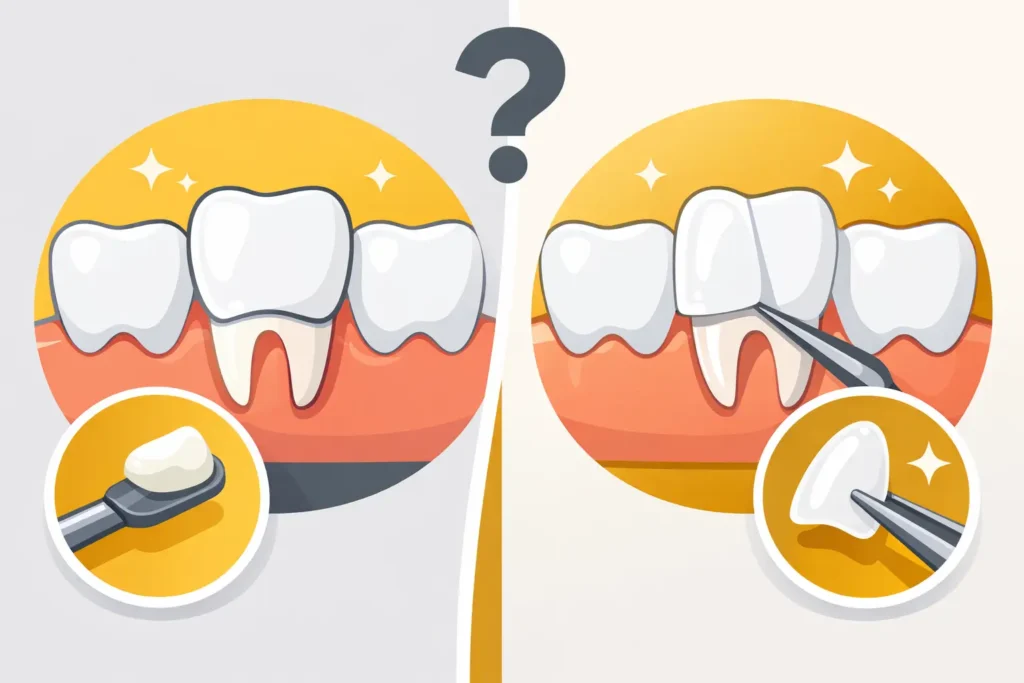
A better smile can feel like a simple cosmetic upgrade until you start comparing treatments and realise how different the options really are. When people research composite vs porcelain veneers, they are usually weighing three things at once – appearance, longevity and cost. The right choice depends less on which veneer is “best” overall and more on what suits your teeth, budget and expectations.
Veneers are thin coverings placed over the front surface of teeth to improve colour, shape, size or minor alignment issues. Both composite and porcelain veneers can create a more even, brighter smile, but they behave differently over time. That matters if you want a quick improvement now, or if you are looking for something that will still look strong and natural years down the track.
Composite vs porcelain veneers: the core difference
Composite veneers are usually made from tooth-coloured resin, similar to the material used for white fillings. A dentist can apply and sculpt the resin directly onto the teeth in a single visit, then harden and polish it. In some cases, composite veneers may also be made indirectly in a lab, but direct composite is the version most people mean when comparing the two.
Porcelain veneers are thin shells custom-made in a dental lab and then bonded to the teeth. They generally require more planning, more precise preparation and at least two appointments. Because porcelain is a separate material fabricated outside the mouth, it tends to offer a more refined finish and stronger stain resistance.
If you want the shortest version of the comparison, composite is usually more affordable and repairable, while porcelain is usually more durable and more lifelike in the long term.
How they look in real life
For many Australians considering veneers, the biggest question is simple: will they look natural?
Both types can look excellent when done well. Composite veneers can be shaped artistically and matched to nearby teeth, especially for small cosmetic fixes such as chipped edges, worn corners or minor gaps. A skilled dentist can produce a very attractive result. The limitation is that composite resin does not reflect light quite the same way natural enamel and porcelain do, so the finish can sometimes look less translucent or polished over time.
Porcelain veneers tend to win on aesthetics, particularly for full smile makeovers or front teeth that are highly visible. They can mimic the depth, shine and translucency of natural teeth more convincingly, which is one reason they remain popular with patients who want a premium cosmetic result.
That does not mean porcelain is automatically the right pick. If your concerns are modest and your natural teeth already have a good shape, composite may give you the improvement you want without the higher cost.
Cost in Australia
Cost is often where the decision becomes more practical.
In Australia, composite veneers are generally cheaper per tooth than porcelain veneers. Exact pricing varies by clinic, dentist experience, location and complexity, but composite is often the more accessible starting point for people who want to improve their smile without committing to a larger upfront bill.
Porcelain veneers usually cost more because they involve custom lab work, extra chair time and a more complex treatment process. For some patients, that higher initial spend feels worthwhile because porcelain often lasts longer and keeps its appearance better. For others, especially if they want to treat several teeth, the total price can be hard to justify.
This is where it helps to think beyond the quote. A lower upfront cost does not always mean lower long-term cost if repairs, polishing or replacement are needed sooner. On the other hand, paying more only makes sense if you are confident you want a long-term veneer solution.
Lifespan and durability
Durability is one of the clearest differences in the composite vs porcelain veneers discussion.
Composite veneers typically last fewer years than porcelain. Depending on your bite, habits and maintenance, they may need touch-ups, repairs or replacement earlier. They are more prone to chipping, edge wear and surface dullness. If you grind your teeth, bite your nails or chew hard objects, composite may show that stress sooner.
Porcelain veneers generally last longer and hold their form and finish better. They resist wear more effectively and are less likely to stain. While porcelain can still chip or crack, especially under heavy force, it is often considered the more durable choice for patients seeking longer-term cosmetic stability.
The trade-off is repairability. Composite can often be patched or reshaped more easily in the chair. Porcelain, if damaged, may need to be fully replaced.
Staining and maintenance
If you drink coffee daily, enjoy red wine or want a low-fuss smile solution, maintenance matters.
Composite veneers are more likely to pick up stains over time. They can also lose some of their gloss, which may make them look older sooner than porcelain. Regular dental cleans, good brushing habits and avoiding heavy staining habits can help, but composite usually needs more ongoing attention to maintain its appearance.
Porcelain is more stain-resistant, which makes it attractive for busy adults who want a smile that stays bright with less maintenance. That does not mean it is stain-proof, and the natural teeth around the veneers can still change colour, but porcelain usually holds its shade better.
Whichever option you choose, veneers still need normal oral care. You will need to brush twice daily, clean between the teeth, attend regular check-ups and avoid using your teeth to open packets or crunch on hard items.
Tooth preparation and reversibility
One of the more overlooked parts of veneer treatment is what happens to the natural tooth underneath.
Composite veneers often require little to no tooth reduction, depending on the case. That can make them a more conservative option, especially for younger adults or those who are not ready for a more permanent change. In some situations, they can even be added with minimal alteration to the natural enamel.
Porcelain veneers usually require some enamel removal so the veneer can sit naturally and avoid looking bulky. Because enamel does not grow back, that makes the process less reversible. This is not necessarily a problem when treatment is well planned, but it is an important consideration if you are still unsure about long-term commitment.
If preserving natural tooth structure is a major priority for you, that is worth raising early in your consultation.
Who composite veneers usually suit best
Composite veneers often make sense for people with minor cosmetic issues, tighter budgets or a preference for a more conservative first step. They can work well for small chips, slight unevenness, worn edges or limited reshaping where a dentist can build directly onto the tooth.
They may also suit patients who want to trial a new smile design before considering a more permanent option later. For some people, especially those comparing cosmetic treatments while also budgeting for aligners or whitening, composite offers a practical middle ground.
That said, if you want a very uniform, high-end result across multiple front teeth, composite may not always deliver the same longevity or polish as porcelain.
Who porcelain veneers usually suit best
Porcelain veneers often suit patients wanting a long-term cosmetic upgrade with strong stain resistance and a more natural enamel-like finish. They are commonly chosen for visible front teeth where aesthetics are the top priority.
They may be the better fit if you have more significant discolouration, want a complete smile makeover, or simply prefer investing more upfront for a result that tends to hold up better over time. Busy professionals often lean this way because the maintenance demands are usually lower once treatment is complete.
Still, porcelain is not ideal for everyone. If your budget is limited, your enamel is already compromised, or your cosmetic goals are relatively modest, it may be more treatment than you actually need.
Questions to ask before choosing veneers
The smartest veneer decisions usually come from asking better questions, not just comparing prices. Ask your dentist how much tooth preparation will be needed, how long each option is expected to last in your case, and whether your bite or grinding habits increase the risk of chipping.
It also helps to ask for realistic examples of results, including what happens if a veneer breaks, stains or needs replacing. A trustworthy provider should explain the strengths and limitations of both options, not steer you toward the most expensive one by default.
For Australian consumers trying to compare cosmetic dental treatments with confidence, that practical clarity matters more than glossy before-and-after claims.
So which one is better?
There is no universal winner in composite vs porcelain veneers. Composite is often the better choice when affordability, conservative treatment and easy repairs matter most. Porcelain is often the better choice when longevity, stain resistance and a more premium finish are the priority.
A good veneer should suit your face, your bite, your routine and your budget – not just look impressive on day one. If you take the time to compare both options properly, you are far more likely to end up with a smile that feels worth it every time you catch it in the mirror.

 English (Australia)