
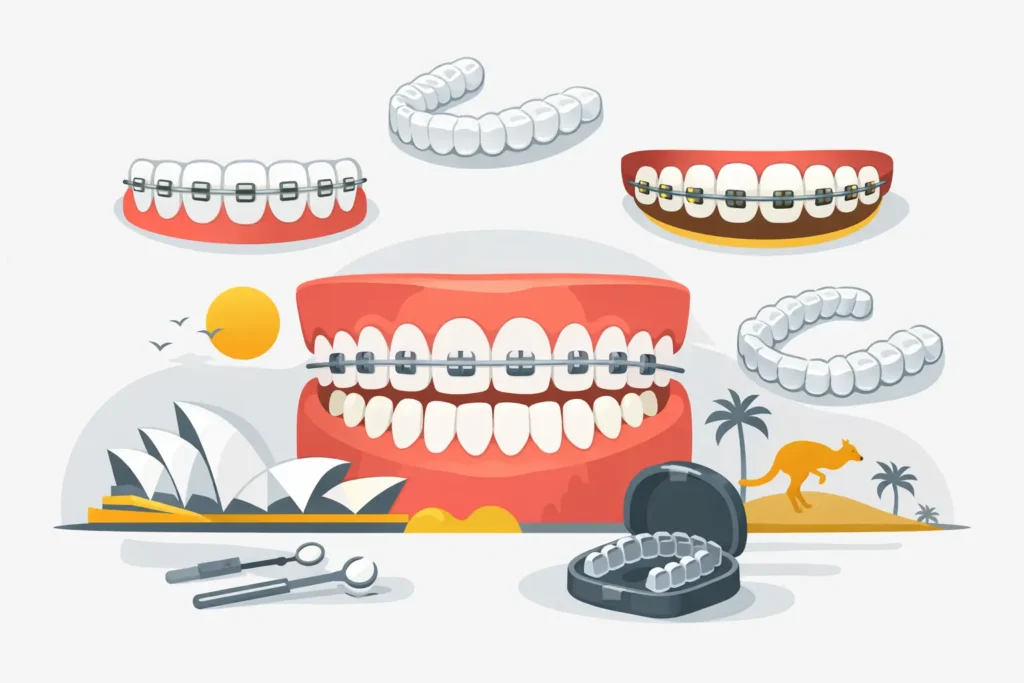
Straightening your teeth is not a small decision. It affects your appearance, budget, daily routine, and in some cases how easily you can clean your teeth for the next year or two. If you are researching types of braces Australia offers, the best option is rarely the one that looks best in a photo or has the lowest advertised price. It is the one that fits your teeth, bite, lifestyle, and willingness to stick with treatment.
For many Australians, the real challenge is not finding a provider. It is making sense of the choices. Traditional braces are still widely used and often very effective, but clear aligners have changed what many adults are willing to consider. Ceramic braces sit somewhere in the middle. Lingual braces are less common, but they do exist. Each comes with trade-offs, and that is where smart comparison matters.
The main types of braces in Australia
When people talk about braces, they are often grouping together several different orthodontic systems. In Australia, the main categories are metal braces, ceramic braces, lingual braces, and clear aligners. They all aim to move teeth into better positions, but they do it in different ways and suit different cases.
Metal braces
Metal braces are the most familiar option. They use small brackets attached to the teeth and a wire that is adjusted over time to guide tooth movement. Modern metal braces are smaller and neater than older versions, but they are still the most visible type.
For moderate to complex orthodontic issues, metal braces are often one of the most reliable choices. They can treat crowding, spacing, bite problems, rotated teeth, and more complicated alignment concerns. Because they stay on your teeth full-time, they do not depend on patient discipline in the same way aligners do.
The downside is obvious. They are noticeable, and they can feel awkward at first. Food restrictions are also part of the deal. Sticky lollies, hard foods, and habits like chewing ice can damage the brackets or wires.
Ceramic braces
Ceramic braces work much like metal braces, but the brackets are tooth-coloured or clear, so they blend in more naturally. For adults and older teens who want fixed braces with a less obvious look, this can be appealing.
They still give orthodontists strong control over tooth movement, which means they may be suitable for many cases that need more than a cosmetic tweak. That said, ceramic brackets can be a little more fragile than metal ones, and in some cases they may cost more. They are also not invisible. Up close, most people will still notice them.
Lingual braces
Lingual braces are fixed to the back of the teeth rather than the front. That makes them far less visible in everyday conversation, which is the main reason people choose them.
They can be a good option for people who want the effectiveness of braces without the front-facing look. But they are not for everyone. They tend to be more expensive, may take time to get used to, and can affect speech more noticeably in the early stages. They are also not as widely offered as other systems, so availability may be more limited depending on where you live.
Clear aligners
Clear aligners use a series of custom-made trays to move teeth gradually. They are removable, transparent, and popular with adults who want a lower-profile orthodontic option. In Australia, clear aligners are now one of the most researched alternatives to braces, especially among people balancing work, social confidence, and convenience.
Their biggest strengths are appearance and flexibility. You remove them for meals and for brushing and flossing, which means there are no food restrictions and oral hygiene is usually easier than with fixed braces. But that flexibility comes with responsibility. If you do not wear aligners for the recommended 20 to 22 hours a day, treatment may slow down or become less effective.
Not every case is suited to clear aligners alone. Mild to moderate crowding and spacing may respond well, but more complex bite issues may need braces, attachments, extra procedures, or a different treatment plan altogether.
How the types of braces Australia clinics offer really compare
The right comparison is not just metal versus clear. It helps to think about five practical factors: visibility, comfort, complexity, maintenance, and cost.
If appearance matters most, clear aligners and lingual braces usually attract the most attention from adults. Ceramic braces are also more discreet than metal, though not as subtle as aligners. If treatment control matters most, fixed braces often have an edge in more complex orthodontic cases because they work continuously and can handle a wider range of movements.
Comfort is more personal than many clinics make it sound. Clear aligners avoid wires and brackets, which some people prefer, but they still create pressure when trays change. Metal and ceramic braces can irritate cheeks and lips at first, especially after adjustments. Lingual braces may feel trickier again because they sit against the tongue.
Maintenance also matters more than people expect. Fixed braces demand careful brushing around brackets and wires. Aligners need disciplined wear, regular cleaning, and the habit of taking them out and putting them back in without losing them. If you are busy, often on the go, or likely to forget trays, a removable system may not be as convenient as it looks on paper.
Cost differences in Australia
Cost is one of the biggest reasons people compare braces so carefully, and fair enough. Orthodontic treatment can be a significant investment.
In Australia, traditional metal braces are often among the more cost-effective options for full orthodontic treatment, though that does not mean they are cheap. Ceramic braces usually cost more than metal. Lingual braces are often at the higher end due to their custom design and complexity. Clear aligners vary widely in price depending on the brand, case difficulty, whether treatment is supervised in person, and how many aligners are needed.
It is also worth checking what is included. Some quotes cover retainers, reviews, X-rays, and refinement trays. Others do not. A lower starting price can look attractive until you realise key parts of treatment are billed separately.
If you have extras cover, private health insurance may contribute towards orthodontics, but limits and waiting periods usually apply. Payment plans are common as well, which can make treatment more manageable month to month.
Which option may suit you best?
This is where it depends becomes the most honest answer.
If you have significant crowding, a difficult bite, or teeth that need more complex movement, metal braces or ceramic braces may be more appropriate. If your top priority is a discreet appearance and your case is suitable, clear aligners could be a strong option. If you want hidden treatment and are comfortable with a higher budget and adjustment period, lingual braces may be worth discussing.
Lifestyle should be part of the decision, not an afterthought. A busy professional who regularly meets clients may prefer a less visible option. A teenager who is unlikely to keep aligners in for enough hours may do better with fixed braces. A parent comparing treatment for a child might put durability and predictability ahead of aesthetics.
Your oral health matters too. If you already struggle with brushing and flossing, fixed braces can make cleaning harder. If you are prone to taking things out and forgetting them, aligners may test your patience. The best treatment is not only what can move teeth. It is what you can realistically manage every day.
Questions to ask before starting treatment
Before committing, ask what type of movement your teeth need and which options are genuinely suitable for your case. Ask how long treatment is likely to take, what happens if refinements are needed, and whether retainers are included at the end.
It also helps to ask about maintenance, emergency appointments, breakages, and total cost rather than base cost. If you are considering aligners, ask how much of the process is monitored and how often your progress is checked. If you are comparing providers, consistency and transparency matter just as much as the appliance itself.
A good provider should explain not only the benefits of one system, but also its limits. That is often the clearest sign you are getting advice rather than a sales pitch.
Final thoughts on types of braces Australia patients can choose from
There is no single winner among the types of braces Australia patients can choose from. The strongest option is the one that matches your orthodontic needs, your budget, and the way you actually live. If you take the time to compare properly and ask better questions, you are far more likely to end up with a result that feels worth it every time you smile.

 English (Australia)