
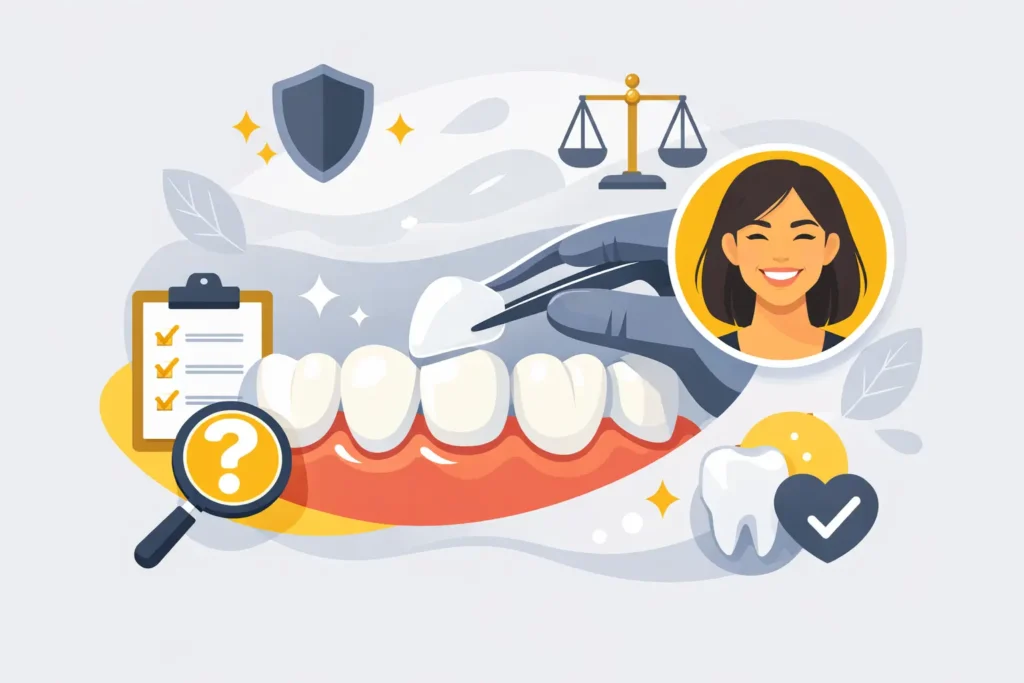
If you have ever zoomed in on your own smile in a selfie and started mentally listing every chip, stain or uneven edge, you are not alone. A lot of Australians ask the same question before booking a cosmetic consult: are dental veneers good, or are they just an expensive shortcut with hidden downsides?
The honest answer is that veneers can be very good, but not for everyone and not for every problem. They can dramatically improve the look of teeth, often with fast, natural-looking results. At the same time, they involve cost, upkeep and, in some cases, permanent changes to the tooth. The right decision comes down to your goals, your dental health and how realistic your expectations are.
Are dental veneers good for most people?
Veneers are thin shells placed over the front of teeth to improve colour, shape, size or symmetry. They are commonly made from porcelain or composite resin and are usually used on the front teeth that show when you smile.
For the right person, veneers are a strong cosmetic option. They can help with stubborn discolouration that whitening does not fix, small chips, worn edges, mild gaps and teeth that look uneven or misshapen. If your main concern is appearance rather than major functional problems, veneers can offer a big visual change without braces or more extensive restorative work.
But veneers are not a cure-all. If you have active gum disease, untreated decay, heavy grinding, poor enamel or significant crowding, a dentist may recommend dealing with those issues first. In some cases, orthodontic treatment, bonding or whitening makes more sense than covering the teeth with veneers.
What veneers do well
The main reason people choose veneers is simple: they can create a cleaner, brighter and more balanced smile quite quickly. Porcelain veneers in particular are known for looking natural because they reflect light in a way that is similar to real enamel.
They also resist staining better than natural teeth and composite materials. That matters if coffee, red wine or smoking have left teeth looking dull over time. For busy adults who want a noticeable result without a long treatment timeline, veneers can be appealing.
Another advantage is customisation. A good cosmetic dentist does not just make teeth whiter. They look at face shape, gum line, bite and the way your smile sits when you talk. Done well, veneers can look polished without looking fake.
There is also a confidence factor that should not be brushed off. For many people, fixing teeth they have felt self-conscious about for years can make smiling, speaking and socialising feel easier. Cosmetic treatment is personal, but confidence is a real outcome.
Where veneers can fall short
This is where the sales pitch often gets trimmed down. Veneers can look great, but they come with trade-offs.
Traditional porcelain veneers usually require some enamel removal. That means the treatment is often irreversible. Once a tooth has been prepared for a veneer, you will likely need ongoing maintenance and eventual replacement over the years.
Cost is another factor. In Australia, veneers can be a significant investment, especially if you are treating multiple front teeth. Porcelain generally costs more than composite, but it also tends to last longer and resist stains better. Composite is more budget-friendly upfront, though it may chip, wear or discolour sooner.
There is also the risk of choosing veneers for the wrong reason. If your issue is mostly alignment, jaw position or grinding, veneers may mask the appearance without solving the underlying problem. That can lead to disappointment or more dental work later.
Porcelain vs composite: which is better?
If you are asking are dental veneers good, you are really also asking which type is worth your money.
Porcelain veneers
Porcelain veneers are generally seen as the premium option. They are durable, stain-resistant and highly aesthetic. They are often made in a lab, which allows for a very detailed finish and tailored fit. Many patients prefer porcelain when they want a longer-term cosmetic result and are comfortable with the higher price.
The downside is that porcelain usually involves more planning, more cost and at least two visits. If one chips or debonds, repair is not always as straightforward as it is with composite.
Composite veneers
Composite veneers are applied directly to the tooth and shaped by the dentist, often in one appointment. They can be a practical option if you want a lower-cost treatment or need minor cosmetic changes.
They do have limitations. Composite is more likely to stain and may not last as long as porcelain. It can still look very good in the right hands, but the finish is usually not as refined or durable over time.
Are dental veneers good if your teeth are healthy?
This is one of the most important questions to ask before treatment. If your teeth are healthy but you do not like how they look, veneers may still be appropriate, but that does not automatically make them the best first option.
A conservative dentist may suggest whitening, contouring, orthodontics or composite bonding before recommending veneers. That is not a bad sign. It usually means they are trying to preserve as much natural tooth structure as possible.
Veneers can absolutely be suitable for healthy teeth when the cosmetic concern is significant enough and the patient understands the long-term commitment. The key is making sure the treatment is proportionate to the problem.
Who tends to be a good candidate
Veneers tend to suit adults with generally healthy teeth and gums who want to improve the appearance of front teeth. They are often a good fit for people with stains that do not respond to whitening, minor chips, uneven edges, small gaps or mild shape differences.
They are less suitable for people with untreated oral health issues, severe clenching or grinding, poor oral hygiene habits or unrealistic expectations about getting a perfect smile. If you want veneers to behave exactly like untouched natural teeth forever, you may be disappointed.
A proper assessment matters. Photos on social media can make veneers look simple, but your bite, enamel thickness and gum health all affect whether they are likely to work well long term.
What about maintenance and lifespan?
Veneers are not a fit-and-forget treatment. You still need to brush properly, clean between teeth and keep up regular dental check-ups. Veneers themselves do not decay, but the teeth underneath and around them still can.
You may also need to be more careful with habits like biting fingernails, crunching ice or opening packets with your teeth. If you grind at night, a dentist may recommend a splint to protect your veneers and natural teeth.
Porcelain veneers can last well over a decade with good care, while composite veneers often have a shorter lifespan. Longevity varies based on material, technique, bite forces and daily habits. A cheaper veneer that needs more frequent replacement is not always the better value.
Cost in Australia: is it worth it?
For many readers, this is the real decision point. Veneers can be worth it if they solve a cosmetic issue that genuinely affects your confidence and if the treatment plan is sound. They are less worth it when chosen impulsively, priced suspiciously low or used to cover problems that should be treated another way first.
Australian pricing varies widely by clinic, city, material and complexity. A smile makeover involving several porcelain veneers can run into the thousands quite quickly. That makes it even more important to compare more than just price. Experience, planning, before-and-after consistency and how clearly the dentist explains limitations all matter.
This is where a research-first approach helps. Platforms such as Tooth Health exist because people need more than glossy marketing. They need context around costs, materials, alternatives and what treatment will actually involve.
Questions worth asking before you commit
Before saying yes to veneers, ask what problem they are solving, whether more conservative options exist, how much enamel will be removed and how long the result is expected to last. You should also ask to see examples of work that look natural, not just very white.
It is also sensible to ask what happens if a veneer chips, whether a temporary will be needed, and how your bite will be checked. A good cosmetic consultation should feel informative, not pushy.
So, are veneers a good idea?
They can be a very good idea when they are used thoughtfully, planned properly and matched to the right patient. Veneers offer strong cosmetic benefits and can create a smile that looks brighter, more even and more confident. But they are not automatically the best option just because they are popular.
The smartest approach is to treat veneers as one option among several, not the default answer. If you understand the trade-offs, choose an experienced provider and make the decision based on your teeth rather than a trend, you are far more likely to feel good about the result.
A better smile should not come from pressure or guesswork. It should come from clear information, careful planning and a choice you still feel comfortable with long after the mirror test.

 English (Australia)