
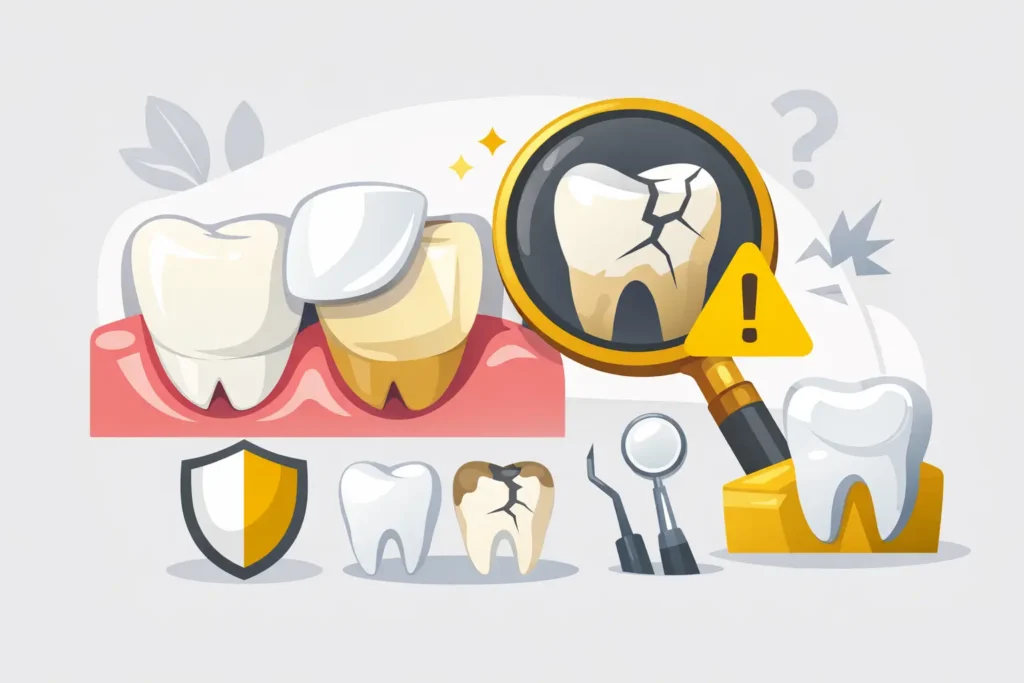
If you’re weighing up a smile makeover, one question tends to come up fast: do veneers damage teeth? It’s a fair concern, because veneers can look simple from the outside, but they’re still a dental procedure that changes the front surface of your teeth. The short answer is that veneers do not automatically damage teeth, but they can involve permanent changes, and the outcome depends heavily on the type of veneer, the condition of your teeth, and the skill of the dentist.
Do veneers damage teeth or just change them?
This is where a lot of the confusion starts. Veneers are thin shells, usually made from porcelain or composite resin, that are bonded to the front of teeth to improve colour, shape, size or symmetry. In many cases, the dentist removes a small amount of enamel first so the veneer can sit naturally and not look bulky.
That enamel removal is the part people are usually worried about. Once enamel is removed, it does not grow back. So if we’re being precise, traditional veneers often do permanently alter the tooth. That is not the same as saying they are harmful or a bad choice. It means the treatment is usually irreversible, and your teeth will need ongoing dental care and likely replacement veneers in the future.
When veneers are done well, on suitable teeth, they should not ruin your oral health. When they are done poorly, or placed on teeth that already have decay, gum disease, heavy grinding, or unstable bite issues, problems can follow.
When veneers are considered safe
Veneers are generally a safe cosmetic option when the teeth underneath are healthy and the treatment plan is conservative. A good dentist will first check for decay, gum inflammation, worn enamel, bite problems and habits like clenching. If those issues are ignored, veneers can end up covering a problem rather than solving it.
The safest veneer cases usually involve minor cosmetic concerns such as staining that won’t respond to whitening, small chips, uneven edges, slight gaps or shape differences. In those situations, veneers can improve appearance while preserving much of the natural tooth.
Minimal-prep and no-prep veneers may remove very little enamel, and sometimes none at all. These options can sound appealing, but they are not right for everyone. If your teeth already protrude, for example, adding material without enough reshaping can make them look thicker and less natural.
How veneers can damage teeth in some cases
The real answer to “do veneers damage teeth” is that they can contribute to damage if the case selection or workmanship is poor. The risks are not usually dramatic overnight failures. More often, they show up as gradual problems.
If too much enamel is removed, the tooth can become more sensitive and more dependent on the veneer for protection. If the veneer margin is poorly fitted, plaque can collect around the edges, raising the risk of decay or gum irritation. If bonding fails, bacteria may get underneath. And if someone grinds their teeth at night, veneers can chip, crack or place extra stress on the underlying tooth.
There is also the issue of over-treatment. Some patients are sold veneers when a simpler option such as whitening, edge bonding or orthodontic treatment would preserve more natural tooth structure. That is why comparison and careful questioning matter, especially if you are researching cosmetic options in Australia and trying to balance results, cost and long-term maintenance.
Common risks to understand
Tooth sensitivity is one of the most common short-term issues, especially after enamel is reduced. This often settles, but not always. Gum irritation can happen if the veneer shape or edge does not work well with your gumline. Veneers can also fracture, debond or wear over time, which may lead to replacement costs.
Another overlooked risk is that veneers do not make teeth immune to dental disease. The tooth underneath can still decay, and your gums can still become inflamed if brushing, flossing and regular check-ups slip.
Porcelain vs composite veneers
The material matters because it affects durability, cost and how much tooth preparation may be needed.
Porcelain veneers are usually more stain-resistant and longer-lasting than composite veneers. They also tend to look more natural in the long run. However, they often require more planning, more precise preparation and a higher upfront investment.
Composite veneers are generally less expensive and can sometimes be done with little or no drilling. They are easier to repair, but they may stain, chip or lose their polish sooner. That does not mean they are inferior in every case. For some people, especially those wanting a more conservative or budget-conscious option, composite can be a practical place to start.
Neither type is automatically damaging. The better question is whether the chosen option suits your teeth, your bite, your habits and your expectations.
Who should be cautious before getting veneers?
Some people are better candidates than others. If you have active gum disease, untreated decay or very weak enamel, veneers should not be the first step. If you grind or clench, your dentist may recommend a night splint or discuss other options first. If your teeth are crowded or your bite is significantly off, orthodontic treatment may need to come before cosmetic work.
People with very high aesthetic expectations also need a realistic conversation. Veneers can improve a smile dramatically, but they are not magic, and chasing an ultra-white, perfectly uniform look can sometimes lead to more tooth reduction than necessary.
This is where a consumer-first approach matters. A trustworthy provider should explain not only the benefits, but also what you are giving up, how long veneers may last, what maintenance costs to expect, and whether there is a less invasive alternative.
Questions to ask before you commit
Before agreeing to treatment, ask how much enamel will be removed, whether you are suitable for minimal-prep veneers, how long the veneers are expected to last, and what happens if one breaks or comes off. It is also worth asking whether whitening, bonding or aligners could address your concern with less permanent change.
Ask to see before-and-after cases that are similar to your starting point, not just ideal results. If the plan includes multiple veneers, ask why each one is necessary. A careful dentist should be comfortable explaining that in plain language.
For Australian patients comparing providers, it is also sensible to ask about total cost, review appointments, provisional restorations if needed, and long-term maintenance. Cosmetic dentistry is not just about the day the veneers go on. It is a commitment you live with for years.
How to reduce the risk of veneer-related damage
The best protection starts before treatment. Choose a qualified dental professional with experience in cosmetic cases and a conservative approach. If a clinic seems focused only on the final look and not on your bite, gum health or enamel preservation, that is worth taking seriously.
After placement, good care makes a real difference. Brush twice a day with a non-abrasive toothpaste, clean between your teeth daily, and keep up with routine dental visits. Avoid using your teeth to open packaging, and be careful with very hard foods if your veneers are new or if you are prone to chipping dental work.
If you grind your teeth, wearing a custom night guard can help protect both veneers and natural teeth. And if you notice sensitivity, a rough edge, gum soreness or a veneer feeling loose, get it checked early. Small issues are much easier to manage before they turn into bigger repairs.
So, are veneers bad for your teeth?
Not necessarily. Veneers can be a very effective treatment for the right person, and many patients are happy with the boost in confidence they get from them. But they are not a harmless beauty add-on either. Traditional veneers usually involve permanent enamel reduction, and they come with maintenance, replacement cycles and potential complications if planning is rushed.
That makes veneers less of a yes-or-no decision and more of a suitability decision. If your teeth are healthy, your goals are clear, and your provider is conservative and skilled, veneers can improve your smile without causing avoidable harm. If the treatment is oversold, poorly planned or used to mask untreated dental issues, the risks rise quickly.
For most people, the smartest next step is not asking whether veneers are good or bad in general. It is asking whether they are the right option for your teeth, your budget and your long-term oral health. That kind of clarity tends to save a lot of time, money and regret later on.

 English (Australia)