
A lot of people start looking into veneers with one simple question – what actually happens in the chair? If you have been wondering how veneers are applied, the good news is that the process is usually more predictable and manageable than people expect. It is also not the same for every patient, which is why understanding the steps matters before you commit.
Veneers are thin shells placed over the front surface of teeth to improve colour, shape, size or symmetry. They are commonly made from porcelain or composite resin, and the way they are applied depends on the material, your natural teeth, and the result you are aiming for. For some Australians, veneers are a straightforward cosmetic upgrade. For others, there may be prep work first, such as treating decay, managing gum issues, or discussing whether orthodontics would make more sense.
How veneers are applied at a glance
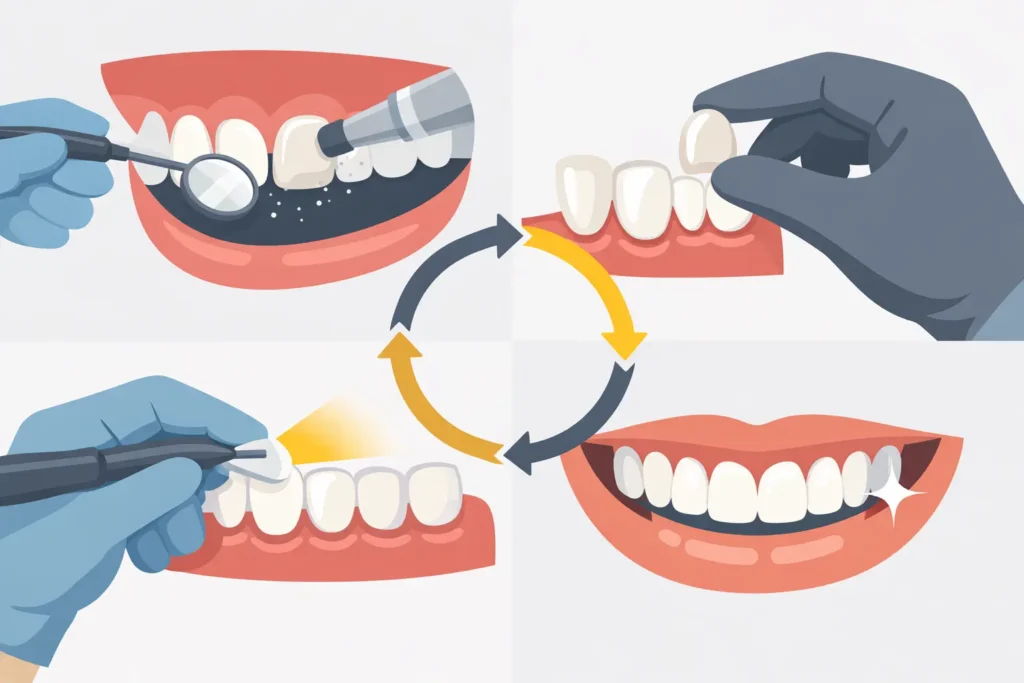
In most cases, the process starts with a consultation, followed by planning, tooth preparation, impressions or scans, veneer fabrication, and bonding. Composite veneers can sometimes be applied in one visit, while porcelain veneers usually take two or more appointments because they are custom-made in a lab.
That sounds simple enough, but the detail in each step is what determines how natural your veneers look and how well they last.
The first appointment: assessment and planning
Before any veneer is placed, your dentist needs to work out whether veneers are the right option for you. This is not just about appearance. They will usually check the health of your teeth and gums, your bite, and whether you grind or clench your teeth.
If you have untreated decay, active gum disease, or significant enamel loss, those issues usually need attention first. Veneers can improve the look of teeth, but they do not fix underlying dental disease. If your teeth are very crowded or unevenly positioned, your dentist may also explain that aligners or orthodontic treatment could give you a better foundation before veneers are considered.
This planning stage often includes photos, X-rays, and either impressions or a digital scan. Some dentists will also do a mock-up or wax-up to show the likely outcome. That can be especially helpful if you are changing the shape or length of your teeth and want to avoid a result that looks too bulky or too bright.
Choosing the right type of veneer
The application process changes depending on whether you are getting porcelain or composite veneers.
Porcelain veneers are made outside the clinic and then bonded to the teeth. They are generally more stain-resistant and tend to last longer, but they also cost more and usually involve more planning.
Composite veneers are sculpted directly onto the teeth using tooth-coloured resin. They can often be completed in one visit and are usually more affordable upfront. The trade-off is that they may be more prone to chipping, staining, or needing touch-ups over time.
There are also minimal-prep or no-prep veneers in some cases, but not everyone is a candidate. If your teeth already project forward, adding material without reshaping the surface can make them look too thick. A good dentist will talk through those limitations rather than selling a one-size-fits-all solution.
Preparing the teeth
When people ask how veneers are applied, this is usually the stage they are most nervous about. Tooth preparation means removing a very thin layer of enamel from the front of the tooth so the veneer can sit naturally and bond properly. For porcelain veneers, this is commonly around 0.3 to 0.7 millimetres, though it varies.
Not every veneer requires the same amount of preparation. Some teeth need very little adjustment, while others need more reshaping to improve balance and avoid a bulky appearance. In certain cases, particularly with composite bonding, minimal or no drilling may be needed.
Your dentist may use local anaesthetic if enamel is being removed, especially if multiple teeth are involved or you are anxious. Many patients find the process easier than they expected. It is precise work, not major surgery.
Once the teeth are prepared, the dentist takes impressions or a digital scan. These records guide the final veneer design, including contour, size, and bite position.
Temporary veneers and the waiting period
For porcelain veneers, there is usually a gap between tooth preparation and final fitting. During this time, temporary veneers may be placed to protect the teeth and maintain appearance.
Temporary veneers are not as strong or polished as the final ones, but they help you function normally while your custom veneers are being made. You may need to be a bit careful with very hard or sticky foods during this period.
This stage can actually be useful from a decision-making point of view. It gives you a chance to get a feel for the proposed shape and length. If something looks off or feels awkward, you can often discuss changes before the final veneers are bonded.
How veneers are applied on fitting day
Once the final veneers are ready, your dentist will check their fit, shape and colour before bonding them permanently. This is a careful process. The veneers are first placed on the teeth without final cement so your dentist can assess how they sit and how they look in your smile.
If everything is tracking well, the teeth are cleaned and prepared for bonding. For porcelain veneers, this usually involves etching the tooth surface and applying a bonding agent. The inner surface of the veneer is also treated so it bonds strongly to the tooth.
A special dental cement is then used to attach each veneer. Your dentist positions the veneer carefully, removes excess cement, and uses a curing light to harden the bond. Once all veneers are placed, they will make final adjustments to the edges and bite.
This part of the process is detailed because even a small issue with positioning can affect comfort or appearance. It is one reason experience and cosmetic planning matter.
What it feels like afterwards
Most people can return to normal activities quite quickly after veneers are fitted. You may notice some mild sensitivity, especially if enamel was removed, but this often settles within days or weeks.
Your bite can feel slightly different at first, particularly if several front teeth were treated. That does not always mean something is wrong. Sometimes it simply takes a short adjustment period. Still, if your veneers feel high, awkward, or you notice ongoing discomfort, it is worth booking a review rather than hoping it will sort itself out.
Veneers should look natural in your face, not just in a close-up photo. Good veneers reflect light in a way that resembles real enamel, and they should suit your age, skin tone and smile line. Overly white or oversized veneers can look artificial, which is why good planning is just as important as good bonding.
Aftercare matters more than many people expect
Veneers are not a set-and-forget treatment. They are durable, but they still rely on healthy teeth and gums underneath.
You will still need to brush twice daily with a soft toothbrush, clean between your teeth, and attend regular dental check-ups. If you grind your teeth at night, your dentist may recommend a splint to protect your veneers from damage. That is especially relevant for porcelain, which is strong but not indestructible.
It also helps to be realistic about lifespan. Porcelain veneers often last many years with proper care, while composite veneers may need maintenance sooner. Coffee, tea and red wine are more likely to stain composite than porcelain, and habits like chewing ice or opening packets with your teeth can shorten the life of either option.
When veneers might not be the best next step
Veneers can be an excellent option, but they are not automatically the best one. If your main concern is tooth colour, whitening may be enough. If the issue is crooked teeth or spacing, aligners could preserve more natural tooth structure. If a tooth is heavily damaged, a crown might be more appropriate.
That is why a good consultation matters. The goal should not just be to get veneers. It should be to choose the treatment that gives you the right balance of appearance, longevity, cost and tooth preservation.
For readers comparing cosmetic options, this is where practical research pays off. Understanding how veneers are applied gives you a clearer sense of what you are signing up for, but the better question is whether the process fits your teeth, your goals and your budget.
If you do decide to go ahead, ask your dentist to explain every step, show you expected results, and be upfront about maintenance. Confidence comes a lot easier when you know exactly what is happening and why.

 English (Australia)